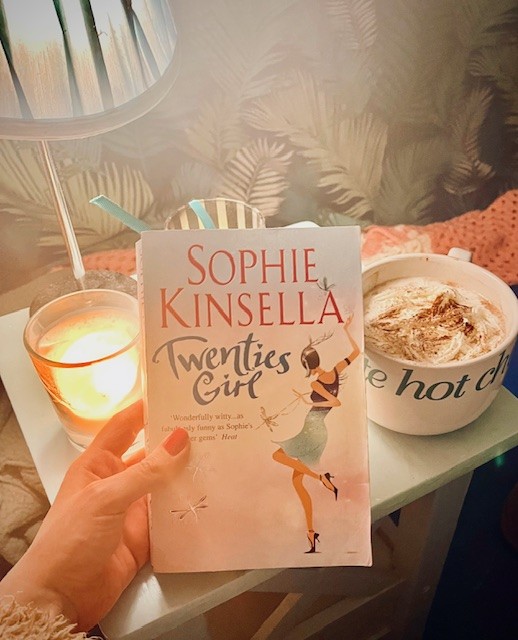
The first few days of the new year are always, I feel, very slow. We can start using the pristine new diaries and calendars that we may have received as Christmas gifts, and we are hopeful that we can better versions of ourselves in the twelve months ahead of us. Most of us are exhausted and spent up from the festive period, and the January weather is always dark and bleak. I love to stay in and feel cosy during the first month of the year and welcome any chance to stay at home on an evening. This year was no different, and I spent most of my free time reading Sophie Kinsella’s 2009 chick-lit novel, Twenties Girl. I can’t remember exactly how the battered paperback came into my possession, as it has been on my bookshelf for a while. After hearing the sad news of Kinsella’s untimely death last month, I felt that now would be appropriate time to finally read it.
As a child growing up in the noughties, Kinsella’s books appeared to me as the epitome of being a ‘cool’ grown-up. Her light-hearted romance novels dominated the book market, particularly the wildly successful Shopaholic series of titles. I was personally too young to read her work, but I remember my mother religiously borrowing them from our local library and I always thought the illustrations of the female protagonists on the front covers looked so glamorous. It was around this time, during the late 1990s and 2000s, when the ‘chick lit’ genre was at the peak of its popularity. The term is used to refer to fiction that is mainly written by women and marketed towards a younger female audience. Novels written by chick-lit writers, such as Kinsella, reflect the postmodern feminism that existed in Western society at the turn of the twenty-first century. Girls who came of age in this era grew up after the post-war second wave of feminism, which changed the social roles and expectations of women. Laws such as the 1970 Equal Pay Act protected women’s rights in the workplace; and the development of the contraceptive pill and 1969 legalisation of abortion also provided women with reproductive rights that previous generations never had. The female protagonists within the chick-lit genre are therefore usually portrayed as career women, who have more casual attitudes to sex and relationships than ‘damsel in distress’ character tropes that had been more commonly depicted in the popular fiction of previous generations.
The narrator of Twenties Girl, Lara Rington, fits into the stereotype of a noughties chick-lit heroine as she is a young woman living alone in London who is in somewhat of a crossroads in her life. She has recently started her own business, in which she feels out of her depth in doing so, and is struggling to accept the break-down in the relationship with her ex-boyfriend. The story begins when she attends the funeral of her elderly great-aunt Sadie, who had been largely forgotten about by her family and received very few visitors at the care home where she spent her final years. At the funeral, Sadie’s ghost appears to Lara, in the form of her twenty-three-year-old self from the 1920s. Sadie may have been used to wearing flapper dresses and dancing the Charleston, while her great-niece would prefer to wear jeans and concentrate on climbing the corporate ladder, but the two embark on a sweet and hilarious friendship. By learning more about Sadie’s life, and realising that her great-aunt was once a funny, party-loving girl, Lara is able to make sense of the world around her and eventually improves fortunes for herself and her family.
The first-person narrative is funny and easy to read, which helps the reader feels as though they have an intimate friendship with Lara. She is the only character in the novel who can see Sadie, which provides a lot of the humour as the secondary characters are confused by Lara’s behaviour when she is interacting with an invisible ghost. Reading the book reminded me of watching the Bridget Jones films (which are adapted from the novels of the same name by fellow chick-lit author Helen Fielding), in the sense that the central female character’s unconventional behaviour causes her to be the subject of mockery by the people around her, but charms the male romantic interest.
Twenties Girl is a charming and heartwarming story that has aged well in the sixteen years since its original publication. If Kinsella published the book in 2026, when romance novels and women’s literature are receiving its rightful recognition, I can imagine it going viral with thousands of readers sharing their love for it on social media. I also think that film adaptation, made and set in the 2020s would also be big hit. In today’s uncertain and divided world, we all sometimes just need a silly little love story that celebrates girlhood across all ages.

 Simone Reddington
Leave a comment