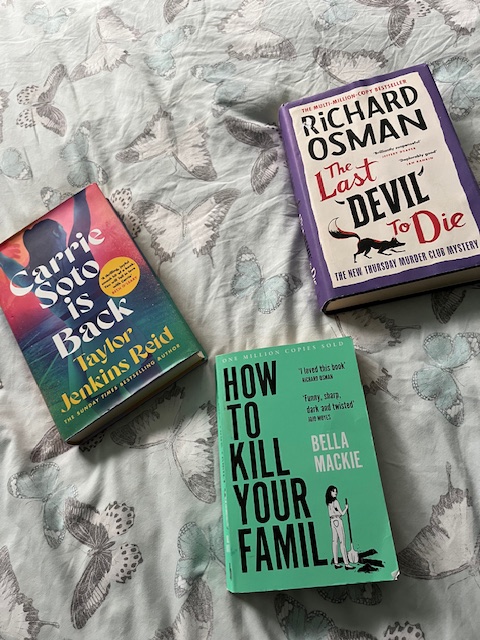
The nights are getting colder and darker; the ground is currently covered in horse chestnuts and Strictly Come Dancing is back on our screens on a Saturday night. Its officially Autumn, one of my favourite seasons and its time that I shared all the books that I’ve read in the third quarter of the year. I’ve been reading a mix of contemporary feminist fiction and self-help books, which go together really nicely.
Breasts and Eggs (Mieko Kawakami)
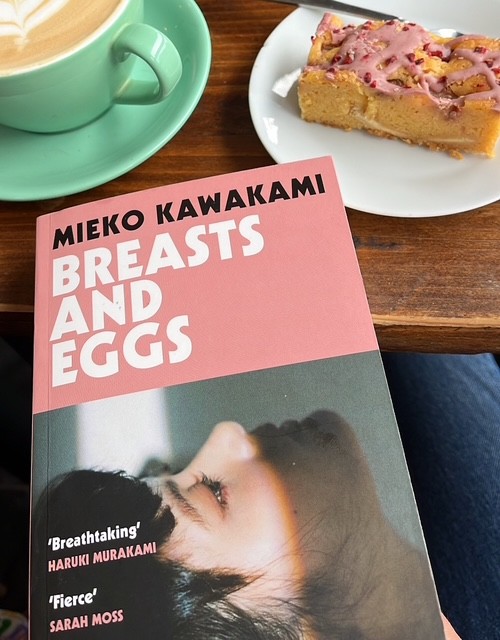
I absolutely adored this novel by contemporary Japanese author, Mieko Kawakami, which is split into two parts. The narrative doesn’t so much as follow a concrete plot but rather provides a social commentary on working-class womanhood. The first part, focusing on breasts, centring around the decision taken by the narrator’s older sister to undergo cosmetic breast implant surgery as she struggles with how society treats women approaching middle-age and start to appear less youthful. The second part, set eight years later, deals with eggs as the narrator goes on a journey of discovery to understand how she, as a single asexual woman, can conceive a child without a partner. The book can be an uncomfortable read at parts (TW: sexual abuse) and forces the reader to question the world around them, which is always a sign of an excellent piece of literature.
Women Don’t Owe You Pretty (Florence Given)
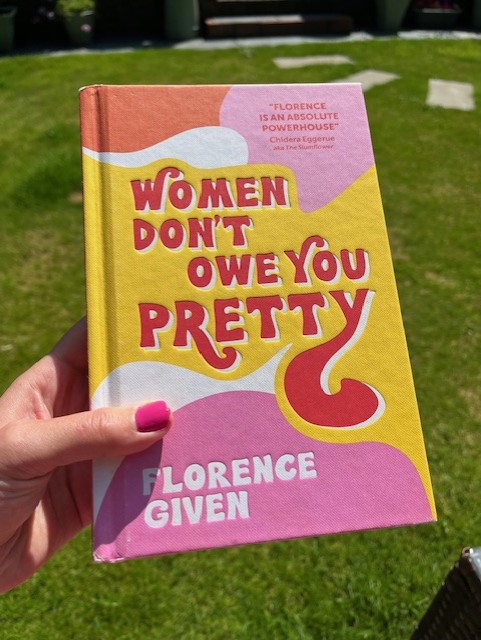
When Florence Given first published her debut self-help book in 2020, it was hugely popular as she had already established herself and her feminist artworks on social media for years prior. WDOYP is her manifesto on how to understand and challenge the patriarchal ideas that are still deeply woven into our society. I have been a fan of Given’s social media content for a while but recently I have found Florence’s reluctance to use her large platform to speak out against what is happening to women and girls in Palestine, and her decision to move to LA last summer in the current American political context to be a complete juxtaposition of the intersectional feminist beliefs that she claims to uphold. However, when I saw her book (which I had been curious to read for a while) on sale in a charity shop for just one pound, I thought I’d read it. It is visually stunning, demonstrating how she is certainly a very talented illustrator. I love her aesthetic, consisting of lots of leopard print and seventies style fonts. However, I found that her actual writing lacks substance. She touches on lots of important topics such as racism, classism, transphobia and fatphobia but doesn’t go into any detail as she is a privileged, conventionally attractive white woman who has never experienced these issues first-hand. The main message theme that the book conveys is that the reader should solely focus upon their own personal boundaries as they don’t owe anything to anybody else in society, which isn’t the most useful advice when Given markets herself as an activist. It’s a nice enough self-help book to read if you need cheering up if you’ve been dumped or had a rubbish day at work, but it certainly is not a piece of feminist critical-thinking literature that should be taken too seriously. I also found her comparison between the content created by social media activists to a university education to be absolutely ridiculous. Overall, I found Given’s tone to be very preachy and condescending to the reader, which annoyed me given her lack of writing credentials.
How to Fail (Elizabeth Day)
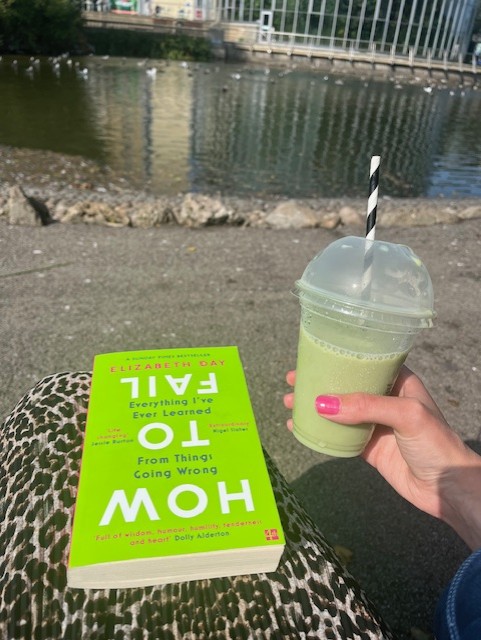
A self-help book that I much preferred reading was How to Fail by journalist and author Elizabeth Day. I am big fan of her podcast of the same name, the premise of which involves interviewing a celebrity about three occasions in which they have failed at something. In her 2019 book, Day shares her own failures in both her personal and professional life, and what she has learnt from them to help her succeed in the future. As somebody in my late-twenties who is currently feeling lost in all aspects of my life (in case it wasn’t obvious by reading so many self-help books), I really resonated with a lot of what she wrote, especially the chapter on failing in your twenties. Admittedly, like Florence Given, Day is also a very privileged, white, middle-class writer but she is fully transparent about this. The unflinching honesty that she bravely uses when discussing her fail to have a baby makes an incredibly powerful read. I would highly recommend this book to anyone who has ever failed at something i.e. every single living person.
Lessons in Chemistry (Bonnie Garmus)
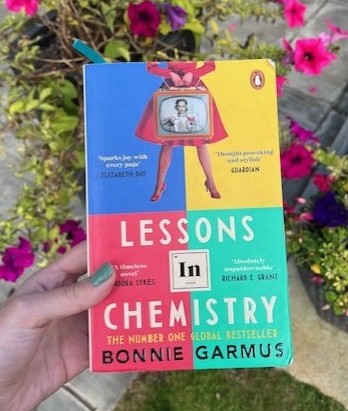
This 2022 historical fiction novel took me longer to read for some reason, but I still enjoyed reading it. The protagonist, Elizabeth Zott, is a female chemist who is making scientific discoveries way ahead of her male contemporaries in 1950s America, but faces unfair discrimination and can’t find to take her work seriously enough to fund her research due to her gender. When she finds herself as a single mother, she becomes the subject of even more sexism until another parent at her daughter’s school gives her the chance to present a daytime television cooking show, created to entertain frustrated housewives. When Elizabeth uses the opportunity to encourage other women to believe in their abilities outside of the home, she helps to drastically change the world around her. The plot did feel a bit far-fetched and silly at various parts of the narrative and, despite being a feminist myself, I did find myself wanting to shake Elizabeth at times for being so stubborn at the expense of herself. It was still a very entertaining read that highlights the barriers in the workplace that women faced in the 1950s/60s, and unfortunately still do.
 Simone Reddington
Leave a comment