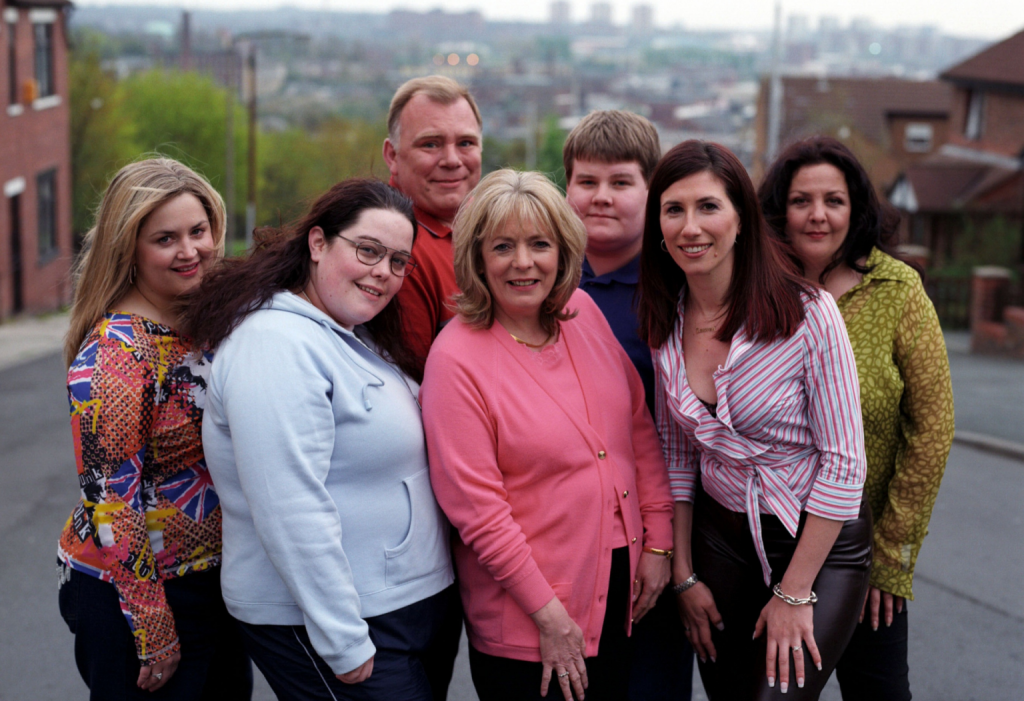
When Fat Friends landed on Netflix earlier this year, Kay Mellor’s classic noughties drama was introduced to a new generation of viewers who were too young to enjoy it when it first aired on ITV back in 2000. The show, which was pivotal for the careers of many of its stars (including Ruth Jones and James Cordon who famously went on to write and star in Gavin and Stacey) followed the trials and tribulations of members of a slimming group within a small working-class community in the outskirts of Leeds. The characters were a mix of male and female, of various ages, but were all connected by their desire to lose weight. As somebody who was born just three years before the first season was aired, I absolutely loved watching Fat Friends, largely because it evoked a lot of nostalgia for me as the depiction of domestic Northern family life in the early 2000s reminded me so much of my own childhood. It is interesting to explore how the show translates to a modern audience, particularly with its main themes of fatphobia and body image.
One thing that I certainly do not miss about the noughties was the toxic diet culture that existed everywhere, as women around the world were shamed if their bodies did not resemble the ‘heroin chic’ aesthetic popularised by very thin models who wore clothes tailored for size 0 measurement, such as Kate Moss who infamously declared that “nothing felt as good as skinny feels” in a magazine interview in 2009 (and later expressed regret over her comment). Allow me to make myself clear: my criticism is not directed towards any of these women whose bodies fit into these smaller measurements but towards the media industry which made lucrative profit from this harmful message, such as the advertising agencies that promoted unattainable crash diets on prime-time television, wrongly advising people that a bowl of breakfast cereal was an appropriate substitution for a meal in the run-up to your summer holiday. Even the most conventionally attractive celebrities in Hollywood were not immune to the cruel body-shaming in the media, with glossy magazines desperate to publish unflattering photos to sell to their audience of insecure women. Mellor reflected this discourse in Fat Friends through the brutal comments made by the slimming group’s organiser Carol (played by Janet Dibley), who didn’t even view pregnancy as a valid reason for weight gain and offered ridiculous advice such as brushing one’s teeth to prevent hunger pangs.
Fat Friends must have felt like a breath of fresh air to its original audience in contrast to the rest of the media landscape as Mellor celebrates the characters’ imperfections. She completely rejects the usual fat character tropes on film and television, where they are reduced to secondary characters who are simply there to provide comic relief. Each member of the slimming group has their own character arc, in which their personal insecurities are explored. They all also find romantic and sexual relationships, dispelling the narrative that fat people are unattractive. Whether anyone in the slimming group ends up losing any weight is irrelevant to the plot in the show, as it is ultimately a story about community and the relationships between family and friends. This demonstrated in the penultimate episode of the final series when the slimmers passionately defend their former bigger selves, declaring themselves as “flamin’ gorgeous” in an altercation with a magazine company.
Since the show ended nineteen years, the body positivity movement, which gained trajected popularity on social media over the last decade has started to change the ways in which fat people are treated in the media. In 2024, nearly all major fashion retailers make sure that their clothing is available in bigger sizes, and we see women in the public eye, such as Adele and Lizzo, unashamedly represent bigger bodies on a global platform. However, the negative feelings that the characters in Fat Friends have towards their weight remains prominent today. Social media appears to be a double-edged sword in this respect, as the constant stream digitally enhanced photos of people with “perfect” bodies on sites such as Instagram and Pinterest have been linked to the rise of body dysmorphia disorder in young people. The term ‘almond mom’, coined from a trending discussion on TikTok, refers to a parent who would encourage their children to follow a restrictive diet while growing up, originating from a 2013 episode of The Housewives of Beverley Hills where reality TV star Yolanda Hadid tells her teenage daughter to slowly chew some almonds when she complains of feeling hungry. Mellor had had already been demonstrated this type of behaviour by Mellor through the character of Betty (played by Alison Steadman) who very clearly passed on her difficult relationship with her body to her daughter Kelly (played by Ruth Jones), as seen when she is horrified to see her daughter eating a chip butty in the first episode of Fat Friends, urging her to “spit it out!”
On the other hand, it is interesting to note that Mellor does not acknowledge that thin people can have also have severe issues with body image until the show’s second season, when it is revealed to the viewers that she suffers from bulimia. She is, however, still presented as a one-dimensional villain who is often referred to as “Stick insect”. I can imagine that this could provide uncomfortable viewing for those who struggled with an eating disorder, which are responsible for more deaths in the UK than any other mental health condition (Priory.com).
In conclusion, Kay Mellor was ahead of her time by telling a story on television that used well-written characters who were funny, showed their vulnerabilities and also just happened to be fat. Although some aspects of Fat Friends do appear as dated to a modern audience (as does any television show made over two decades ago) it is still a funny, heartwarming and extremely relatable story.
(Image source: advanced-television.com)



 Simone Reddington
Leave a comment